






Exim Data

Exim Data: The Complete Guide to Smarter Export Import Intelligence for Indian Businesses

Every successful export business is built on one foundation — the right intelligence at the right time.

In global trade, that intelligence is called exim data.

Exim data — short for export import data — is the structured record of every product that crosses an international border. It tells you what is being traded, between which countries, in what volumes, by which buyers and suppliers, and at what price points. For Indian exporters who understand how to access and use it, exim data is the most powerful competitive tool available in global trade today.

Yet the vast majority of Indian exporters either do not know exim data exists, do not know how to access it, or access it in formats that are too raw and unstructured to generate real business value.

At Exim Elite Pune, we have built India’s most powerful exim data intelligence platform — transforming raw customs records into verified buyer connections, market insights, and competitive intelligence that Indian exporters can act on immediately.

This complete guide will walk you through everything you need to know about exim data — what it is, where it comes from, how to use analytics tools to extract value from it, and how Exim Elite Pune turns exim data into real international deals.

What Is Exim Data?

Exim data is the official record of all export and import transactions processed through customs authorities worldwide. Every time a product crosses an international border — whether it is a container of basmati rice leaving Mumbai port or a shipment of pharmaceutical tablets arriving at Rotterdam — the transaction is recorded in detail by the relevant customs authority.

This record includes:

  • Product name and HSN or HS classification code
  • Quantity and unit of measurement
  • Shipment value in USD or local currency
  • Exporter company name and country of origin
  • Importer company name and country of destination
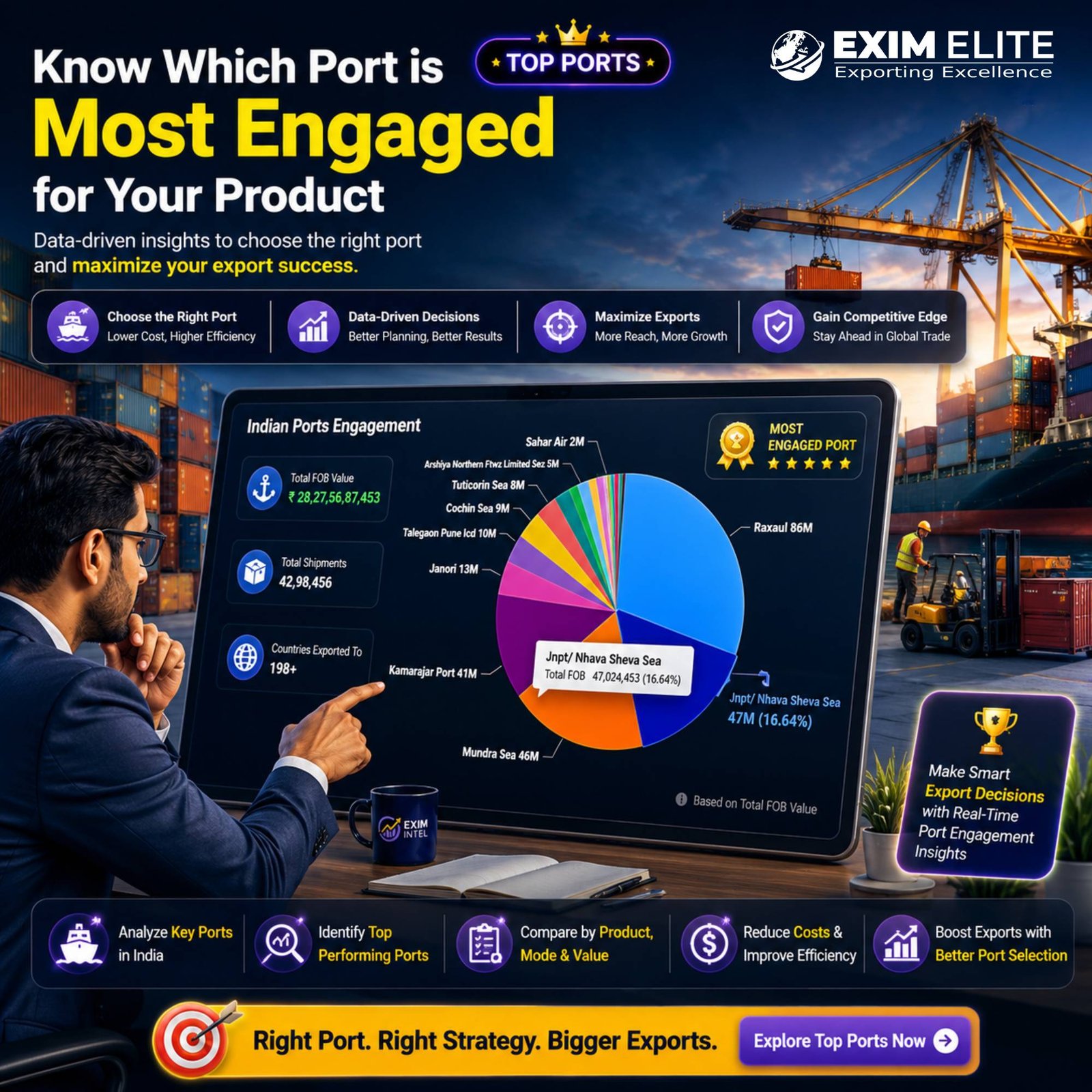
  • Port of loading and port of discharge
  • Date of shipment and mode of transport
  • Applicable duties, tariffs, and trade agreement benefits claimed

When this data is aggregated, organized, and made searchable across multiple countries and product categories — it becomes one of the most powerful business intelligence assets available to exporters, importers, and trade professionals anywhere in the world.

Exim Data India: Understanding India’s Trade Intelligence Landscape

Exim data India represents one of the richest and most valuable trade datasets available globally — reflecting India’s position as one of the world’s most active and diverse trading nations.

How India’s Exim Data Is Collected

India’s exim data is collected and maintained by several official authorities:

CBIC — Central Board of Indirect Taxes and Customs Every export and import shipment processed through Indian customs is recorded in CBIC’s systems — creating a comprehensive record of India’s trade activity across all product categories, ports, and trading partners.

DGFT — Directorate General of Foreign Trade The DGFT maintains export and import policy records, IEC registrations, and licensing data — providing a regulatory and compliance dimension to India’s official trade database.

Ministry of Commerce and Industry The Ministry publishes aggregate trade statistics — monthly and annual export and import figures by product category and country — providing the macro-level view of India’s trade performance.

What India’s Exim Data Reveals

India’s exim data provides a detailed picture of:

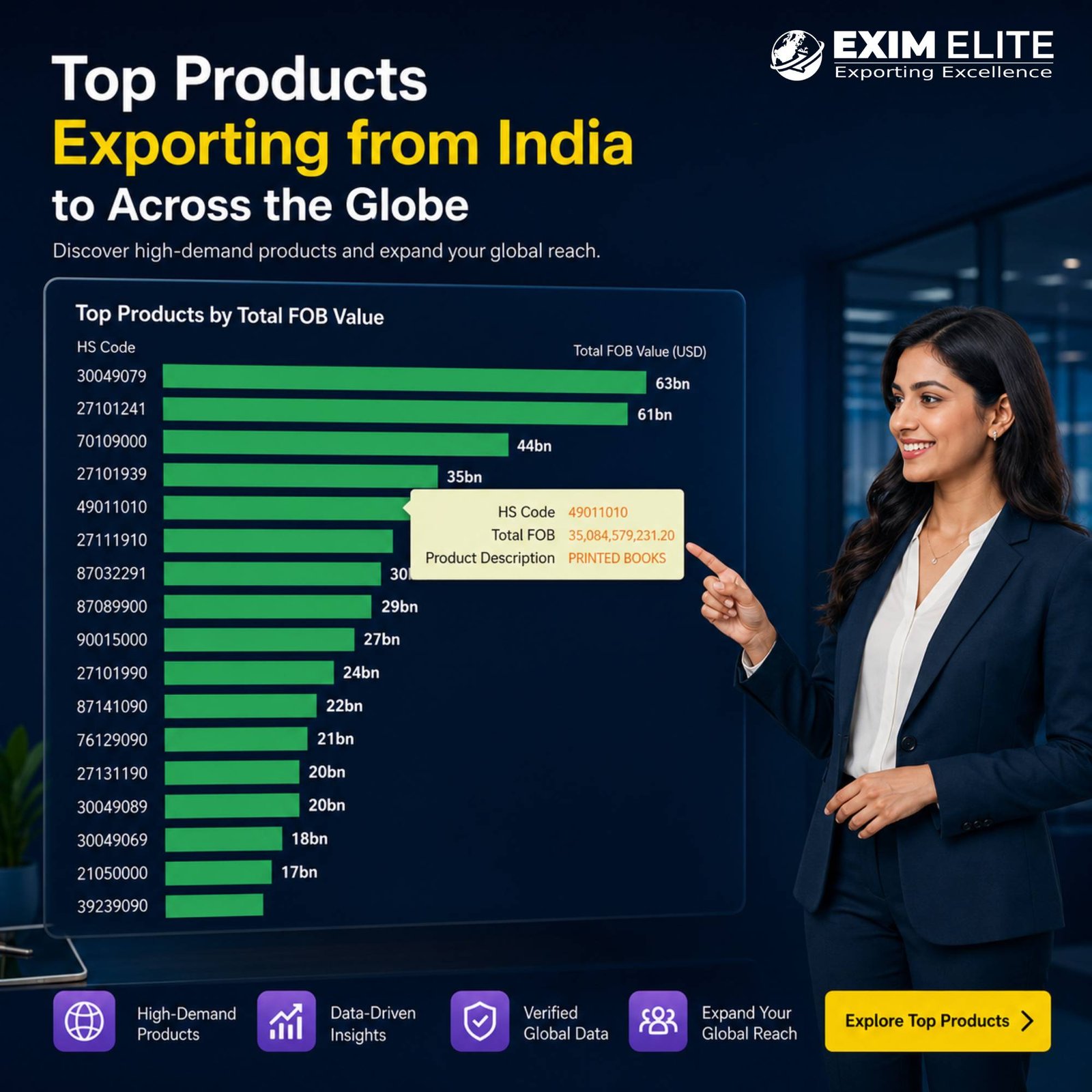
  • Which products India is exporting and in what volumes
  • Which countries are the top destinations for each export category
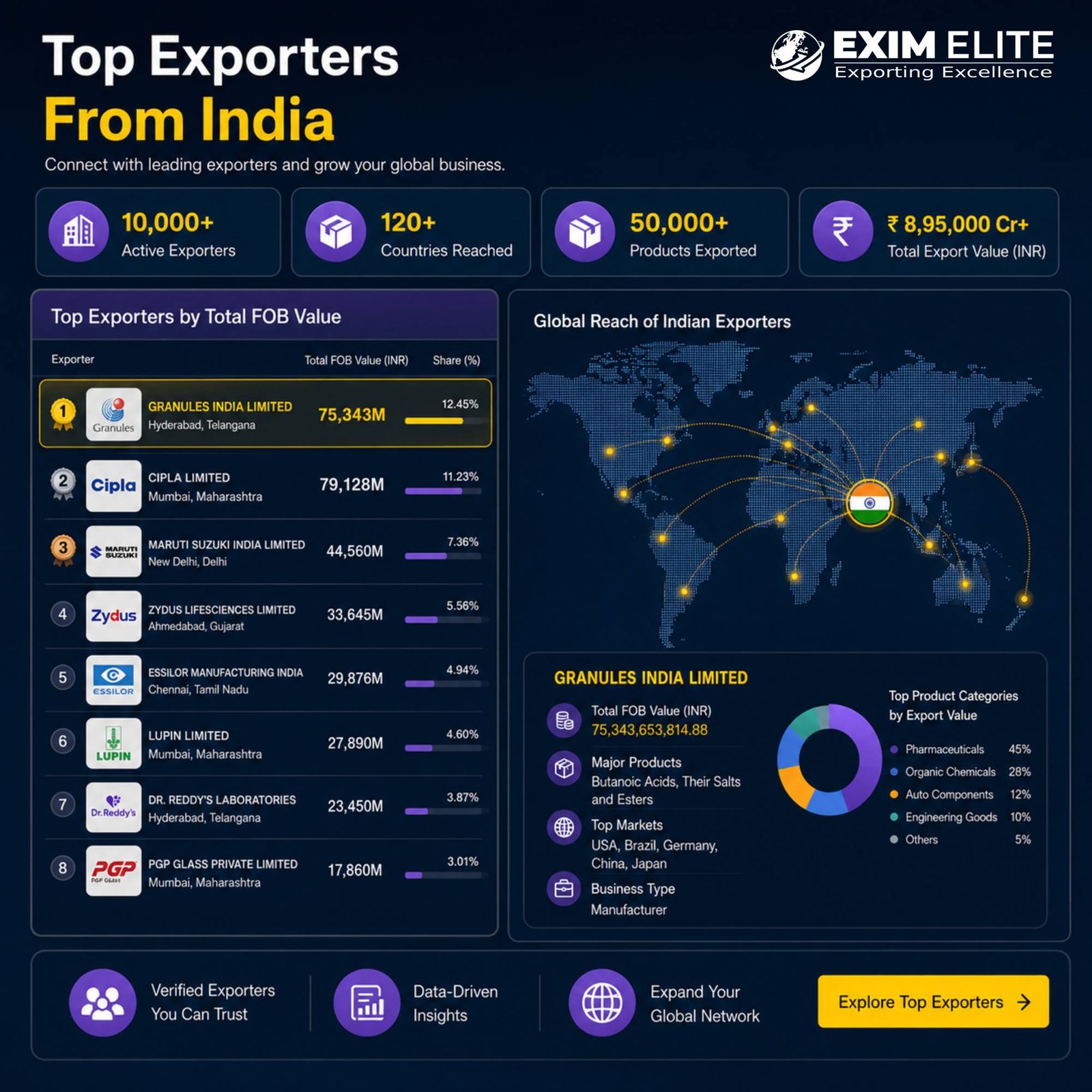
  • Which Indian companies are the most active exporters in each sector
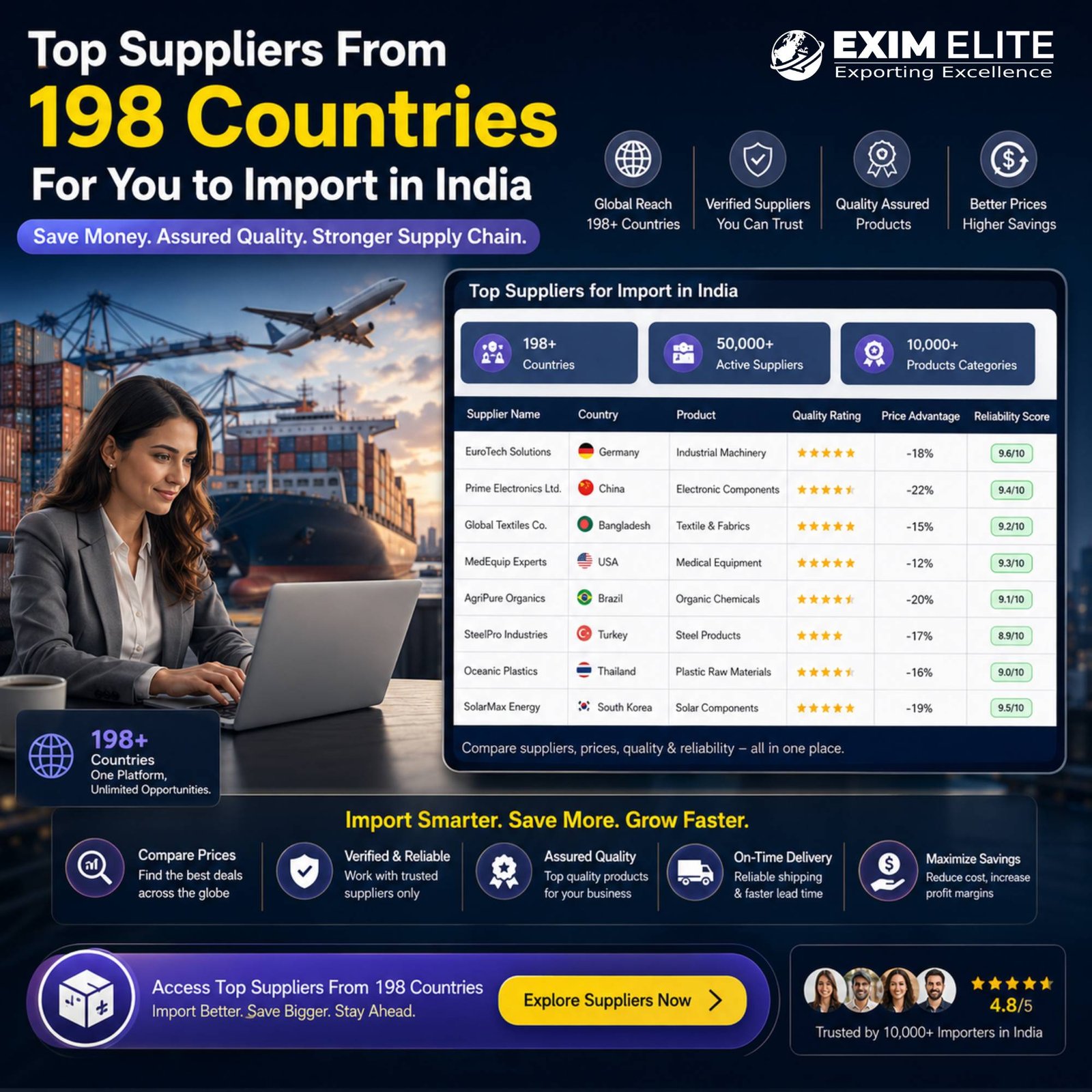
  • Which foreign companies are importing from India and how frequently
  • What price points Indian exporters are competing at in international markets
  • How India’s trade flows are shifting in response to geopolitical and economic changes

For Indian exporters, this data is not just informative — it is strategically decisive. Understanding where India’s export strength lies, who the active buyers are, and where the competitive gaps exist is the foundation of every successful export strategy.

Using Exim Elite Pune’s trade data analytics platform, Indian exporters can search India’s exim data by HSN code, product category, destination country, and buyer profile — extracting the specific intelligence they need to identify opportunities and act on them immediately.

Exim Data Excel: Why Spreadsheets Are Not Enough

For many Indian exporters, the first encounter with exim data comes through Excel — either downloading trade statistics from government portals or receiving data exports from basic trade information services.

Excel-based exim data analysis has genuine advantages for basic tasks:

Basic Data Organization — Excel allows exporters to sort, filter, and organize trade data in customizable formats for internal reporting and presentation.

Simple Statistical Analysis — Basic calculations — total import volumes, year-on-year growth rates, market share percentages — can be performed efficiently in Excel.

Shareable Reports — Excel files are easily shared with team members, management, and trade finance partners as part of market research presentations.

Where Exim Data Excel Falls Critically Short

However, for the core tasks that actually drive export business growth, exim data Excel approaches consistently fall short in ways that directly cost exporters time, money, and missed opportunities:

Static Data — Excel files capture a snapshot of trade data at a single point in time. In a dynamic market where buyer activity changes continuously, static data quickly becomes outdated and unreliable.

No Buyer Contact Intelligence — Excel exports of trade statistics contain aggregate numbers — not verified buyer names, company profiles, or contact details. The most critical information for actual buyer discovery is simply absent.

Manual Research Burden — Analyzing large volumes of trade data in Excel requires significant manual effort — formatting, cross-referencing, deduplication, and interpretation — that consumes hours or days of time that could be spent on actual buyer outreach.

No Real-Time Updates — New shipment records appear continuously as customs processes global trade transactions. An Excel file downloaded last month is already significantly outdated compared to a platform with real-time data feeds.

Limited Analytical Capability — Complex trade intelligence tasks — identifying buyer frequency patterns, tracking competitor shipment histories, analyzing price trend movements — require analytical infrastructure that Excel simply cannot provide at the scale and speed modern exporters need.

The limitations of Excel-based exim data are not a reflection of user capability — they are a reflection of the fundamental mismatch between a general-purpose spreadsheet tool and the specialized requirements of professional trade intelligence.

Exim Data Analytics Tools: Transforming Raw Data Into Business Intelligence

The most significant evolution in exim data utilization over the past decade has been the development of dedicated exim data analytics tools — specialized platforms built specifically to transform raw customs records into actionable business intelligence.

What Exim Data Analytics Tools Do

A professional exim data analytics tool does far more than simply store and display trade records. The best platforms perform multiple layers of data processing and analysis to deliver intelligence that is immediately actionable:

HSN Code-Based Product Search Enter your product’s HSN or HS classification code and instantly retrieve all global trade activity for that product — buyers, sellers, volumes, prices, and trends — across multiple countries simultaneously.

Buyer Profile Generation Rather than showing aggregate import statistics, advanced analytics tools generate detailed profiles of individual importing companies — including company name, country, import history, shipment frequency, order volumes, existing suppliers, and contact details.

Competitor Tracking Monitor exactly what your competitors are exporting — which markets they are targeting, which buyers they are supplying, what volumes they are shipping, and what price points they are competing at. This intelligence allows exporters to identify gaps in competitor coverage and position their offerings more effectively.

Market Trend Analysis Track how import demand for your product is evolving over time — identifying growing markets, declining markets, seasonal patterns, and demand shifts driven by geopolitical or economic changes.

Multi-Country Simultaneous Analysis Rather than researching one country at a time, advanced analytics tools allow exporters to analyze import patterns across dozens of countries simultaneously — dramatically accelerating market research and opportunity identification.

Real-Time Data Updates The best analytics platforms update their databases continuously as new customs records become available — ensuring exporters always have access to currently active buyer intelligence rather than historical snapshots.

Why Exim Elite Pune Leads in Exim Data Analytics

Exim Elite Pune’s platform is built around all of these analytics capabilities — delivering a complete, integrated exim data intelligence solution that gives Indian exporters everything they need to identify opportunities, find verified buyers, and make data-driven decisions that consistently outperform guesswork-based approaches.

The platform is specifically designed for Indian exporters — with an intuitive interface that makes powerful trade analytics accessible to users at every experience level, from first-time exporters running their initial market research to experienced trade professionals conducting deep competitive analysis.

Export Import Data Provider: How to Choose the Right Partner

Choosing the right export import data provider is one of the most consequential decisions any Indian exporter will make — because the quality of your data provider directly determines the quality of your buyer intelligence and therefore the success of your entire export strategy.

Here are the five critical criteria every exporter should apply when evaluating an export import data provider:

Criterion 1 — Data Source and Verification

The only genuinely reliable source for export import trade intelligence is official customs records. Any provider whose data comes from directories, websites, business listings, or unverified secondary sources cannot guarantee the accuracy or relevance of their buyer information.

Always ask: where does your data come from and can you verify it against official customs records?

Criterion 2 — Update Frequency and Recency

Trade data has a shelf life. A buyer who was actively importing six months ago may have already secured a long-term supplier agreement, changed their sourcing strategy, or exited the market entirely. The best data providers update their databases in real time or near-real time — ensuring every buyer profile reflects current market activity.

Criterion 3 — Buyer-Level Intelligence Depth

The difference between a good data provider and an exceptional one is the depth of buyer-level intelligence they provide. Aggregate country statistics tell you that a market exists. Buyer-level data tells you exactly who to call, what they are buying, how much they order, and when they are most likely to be actively sourcing.

Criterion 4 — Country Coverage

A provider with limited country coverage restricts your market opportunities. The best providers cover 100+ countries — giving exporters the global view needed to identify the strongest markets regardless of geography or traditional trade relationships.

Criterion 5 — Pricing and Support

Professional exim data intelligence should be accessible to exporters of all sizes — not just large corporations with unlimited research budgets. The best India-based providers offer competitive pricing accessible to SMEs and MSMEs, combined with dedicated expert support for data interpretation and strategy development.

Import Export Data Providers: The Complete MarketOverview

The landscape of import export data providers available to Indian exporters has expanded significantly — reflecting the growing recognition that data-driven buyer discovery consistently outperforms every traditional alternative.

Global Providers

Panjiva (S&P Global) — Premium global coverage with excellent buyer-level detail. Priced for large corporations with significant research budgets. Less accessible for Indian SMEs and MSMEs.

ImportGenius — Strong USA and Latin America coverage with detailed shipment records. Limited India-specific context and support.

Trademo — Growing global platform with multi-country coverage. Moderate buyer-level detail and mid-range pricing.

Volza — Newer entrant with global coverage and reasonable pricing. Still developing India-specific depth and local support infrastructure.

Xeneta — Specialized in freight rate intelligence rather than buyer discovery. Valuable for logistics optimization but limited for exporter buyer finding.

India-Based Providers

Seair Exim Solutions — Established India-focused platform with broad trade coverage and multiple subscription tiers.

InfodriveIndia — India-specific customs data with shipment-level records. Strong India coverage with moderate buyer-level detail.

Zauba Corp — Publicly accessible India trade data with basic importer and exporter name visibility. Limited contact intelligence and no real-time updates.

Export Genius — Multi-country platform with global buyer discovery capability. Moderate India-specific depth.

Why Exim Elite Pune Is the Right Choice for Indian Exporters

Among all available import export data providers, Exim Elite Pune stands out as the definitive choice for Indian exporters through a combination of advantages that no single competitor matches:

Verified Customs-Sourced Data — Every record in our database is sourced directly from official customs authorities and verified against actual shipment records — not compiled from directories or secondary sources.

India-First Intelligence Architecture — Our platform is built specifically for Indian exporters — with deep India trade database coverage, India-specific regulatory context, local market expertise, and support from trade professionals who understand the specific challenges and opportunities facing Indian businesses in global markets.

Complete Buyer-Level Intelligence — We provide verified importer names, company profiles, import history, shipment frequency, existing supplier relationships, and direct contact details — the complete buyer intelligence package that drives real outreach and real deals.

100+ Country Coverage — Whether your target markets are in the Middle East, Southeast Asia, Africa, Europe, or the Americas — our platform provides verified buyer intelligence across more than 100 countries worldwide.

Continuously Updated Database — Our platform is updated in real time as new customs data becomes available — ensuring Indian exporters always have access to currently active buyer intelligence.

SME-Accessible Pricing — Unlike global platforms priced for multinationals, Exim Elite Pune’s pricing is specifically designed to be accessible for India’s vast community of small and medium exporters — ensuring that world-class exim data intelligence is available regardless of business size or budget.

Dedicated Expert Support — Our team of experienced trade professionals provides ongoing support for data interpretation, market analysis, and export strategy development — a level of service that purely technology-focused platforms cannot match.

How to Use Exim Data Strategically: A Step-by-Step Framework

Access to exim data is only valuable when used strategically. Here is a proven framework:

Step 1 — Define Your Product’s HSN Code Every exim data search begins with your product’s correct HSN classification code. Accurate classification is essential for finding relevant trade records.

Step 2 — Analyze Global Import Demand Search exim data across multiple countries to identify where demand for your product is strongest and growing most consistently.

Step 3 — Identify Active Buyers Use buyer-level exim data to find companies that are currently importing your product — prioritizing those with consistent frequency and volumes matching your supply capacity.

Step 4 — Analyze Competitor Exporters Review India exim data to understand what your most successful competitors are doing — which markets they serve, which buyers they supply, and at what price points they compete.

Step 5 — Build Data-Backed Outreach Approach buyers with intelligence — referencing their import history, demonstrating knowledge of their market, and positioning your offering relative to their existing suppliers.

Step 6 — Monitor Continuously Review exim data regularly to track emerging opportunities, new buyer activity, and shifting market dynamics.

Conclusion

Exim data is not just information — it is the intelligence foundation of every successful export business.

From understanding India’s trade landscape and identifying the strongest global markets, to finding verified international buyers and building data-backed outreach campaigns — exim data intelligence is the decisive competitive advantage that separates Indian exporters who consistently close international deals from those who are still searching for their first genuine buyer connection.

Free sources and Excel-based approaches are useful starting points — but for exporters serious about growing their international business, professional exim data analytics is a non-negotiable investment.

Exim Elite Pune delivers India’s most powerful, most verified, and most actionable exim data intelligence — giving Indian exporters everything they need to compete and win in global markets.

Do not export on assumptions. Export on intelligence. Export smart with Exim Elite Pune.

FAQ

Q1. What is exim data India? Exim data India is the official customs record of all export and import transactions processed through Indian ports and borders — including product details, HSN codes, shipment values, buyer and supplier names, and trade volumes across all countries and product categories.

Q2. What are the best exim data analytics tools available? The best exim data analytics tools provide HSN code-based search, buyer profile generation, competitor tracking, market trend analysis, and real-time database updates. Exim Elite Pune’s platform delivers all of these capabilities in one integrated, India-focused solution.

Q3. Can I analyze exim data in Excel? Basic exim data can be organized in Excel for reporting purposes. However, Excel-based analysis cannot provide real-time buyer intelligence, verified importer contact details, or dynamic competitor tracking — making a dedicated analytics platform essential for serious export business growth.

Q4. What should I look for in an export import data provider? Prioritize providers whose data is sourced from official customs records, updated in real time, provides buyer-level detail including contact information, covers 100+ countries, offers accessible pricing, and provides dedicated expert support.

Q5. Why is Exim Elite Pune the best import export data provider for Indian exporters? Exim Elite Pune combines verified customs-sourced data, complete buyer-level intelligence, India-first platform design, 100+ country coverage, real-time updates, SME-accessible pricing, and dedicated trade expert support — delivering the most complete and actionable exim data solution available to Indian exporters.

Scroll to Top